



Q&A
The "infrared blocking rate" data commonly indicated in the market does not equate to the overall insulation functionality of heat-resistant films. Internationally, there is no standardized definition for the "infrared" blocking rate or "infrared" insulation rate.
In principle, when sunlight shines on glass, it undergoes penetration (thermal energy entering the interior of the car), reflection (thermal energy reflecting outside the car), and secondary radiation after absorption (the glass absorbs heat and then radiates it outside or inside the car). The total heat insulation rate is the sum of reflection and outward secondary radiation compared to the source.
For example, when sunlight shines on the glass, 43% is directly reflected outside the car, 22% directly penetrates into the car, and the remaining 35% of absorbed heat is radiated either inside or outside. If 25% is radiated outward and 10% inward, the total heat insulation rate would be 68% (including the 43% reflection and the 25% outward secondary radiation). As evident, the total heat insulation rate is not an easily estimated value; it requires laboratory simulation measurements and mathematical formula calculations to obtain. The total heat insulation rate is the first criterion when choosing automotive heat-resistant films, with a higher value being more favorable. It is essential to carefully select brands that have passed rigorous total heat insulation rate calculations.

The detailed formula for the total heat insulation rate is disclosed here (the formula is derived from ISO 9050): Total Heat Insulation Rate = 1 - Solar Heat Gain Coefficient (SHGC).
If we categorize heat-resistant films on the market based on material, they can be divided into metallic and non-metallic films. In terms of their operating mechanisms, they can be further classified into reflective and absorptive types. Metallic films are commonly reflective, while non-metallic films (such as ceramic films) are absorptive.
Heat-resistant films containing metallic materials can effectively block heat but may interfere with signals in electronic devices and are prone to oxidation, leading to durability issues. Spectrum-selective heat-resistant films that do not contain metallic components, commonly known as anti-IR films, mainly achieve their effect by absorbing thermal energy on the film. However, the retention of thermal energy on the heat-resistant film can result in a higher surface temperature of the glass and more radiation entering the interior compared to reflective types.
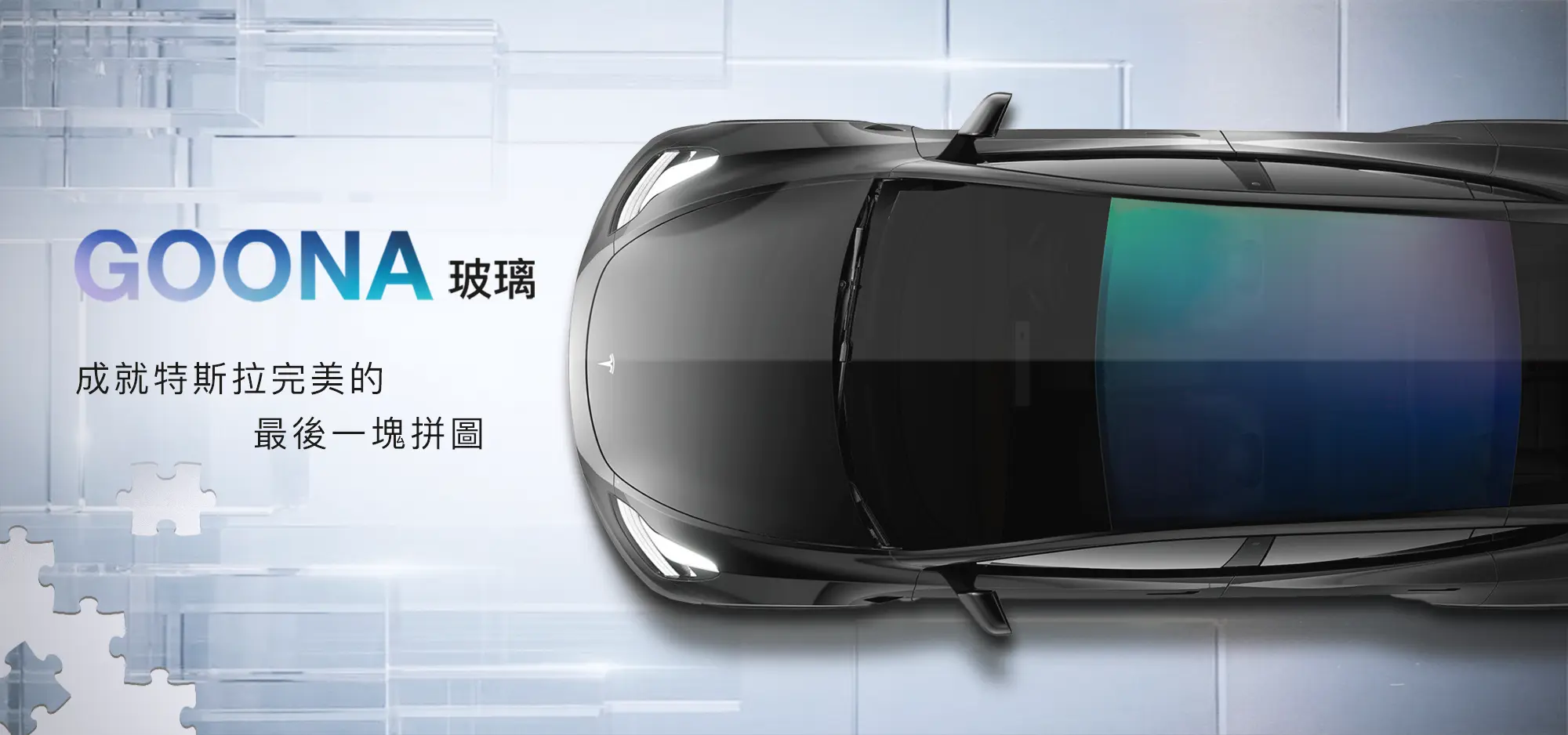
Shan-Cing Corporation has developed a reflective heat-insulating energy-saving glass technology, which is the only non-metallic reflective technology in the market. Based on this technology, they have launched "GOONA GLASS," which achieves sunlight reflection energy efficiency close to metallic heat insulation. This results in excellent heat insulation without affecting electronic signals, oxidation issues, and, most importantly, without heat accumulation.
On the market, the total heat insulation rate of metallic reflective heat-resistant films is approximately 50-70%, slightly superior to the total heat insulation rate of ceramic absorptive heat-resistant films, which is around 45-65%. In addition to a slightly lower total heat insulation rate, ceramic heat-resistant films may also experience a situation where the internal temperature does not drop as much with increasing glass temperature over exposure time.
In summary, purely in terms of heat insulation performance, the effect of metallic reflective heat-resistant films is generally better than ceramic absorptive heat-resistant films. However, metallic heat-resistant films face challenges such as oxidation degradation and signal interference. The heat insulation functionality typically declines significantly within 1-2 years, and in some cases, even within a year. Therefore, in terms of product stability, many people still choose ceramic heat-resistant films.
Reflective heat insulation involves blocking infrared rays by reflecting them outdoors, theoretically superior to absorptive heat insulation methods. Currently, reflective heat insulation often utilizes a metal coating, such as silver (Ag), or a multilayer metal stacking technique. Due to the properties of metals, a high reflectance (>50%) and significant blocking efficiency (>90%) for infrared rays can be easily achieved.
Shan-Cing's "GOONA GLASS" is prepared using a vacuum sputtering method to create a multilayer ceramic reflective film structure. It achieves infrared reflection performance close to metallic heat insulation (>55%) and a blocking efficiency of over 99% for infrared rays, ensuring excellent heat insulation.
Importantly, it does not interfere with electronic signals and does not experience oxidation degradation, making it a product that combines the advantages of both absorptive and reflective heat insulation.
There are two main types: wet deposition and dry deposition. Wet deposition coatings have a shorter lifespan (1-3 months), while dry deposition coatings can last for over a year. "GOONA GLASS," introduced by Shan-Cing, utilizes a dry deposition process, specifically the highest-grade semiconductor plasma process. The product has a hardness of over 8H and has passed wear resistance tests for automotive glass verified by world-class testing units, demonstrating excellent stability. Additionally, the product comes with an 8-year or 160,000-kilometer warranty and is the only reflective product used on the outer layer of glass in Taiwan that does not require adhesion.
This concept is not entirely accurate. In the solar spectrum, energy distribution includes ultraviolet (UV) radiation (<380 nm) at 6.6%, visible light (380~780 nm) at 44.7%, and near-infrared (NIR) radiation (>780 nm) at 48.7%. Visible light refers to light that is visible to the human eye, while infrared and ultraviolet light are not visible to the naked eye. When we perceive an object as dark, it means that the visible light has been absorbed by the object. However, the source of heat sensation is infrared radiation, so effective blocking of infrared radiation is what creates a sense of heat insulation.
We often say that glass is transparent, referring to the proportion of visible light that can pass through it. The lower the proportion, the less transparent it appears, and the higher the proportion, the clearer and more transparent it looks, improving the line of sight while driving. According to literature, 70% of the heat inside a car comes from radiant heat, with a significant portion of it being infrared radiation. Therefore, blocking all the infrared radiation outdoors can create a cool sensation. However, even though infrared radiation is a primary contributor to heat, visible light also carries energy. Therefore, appropriately reducing the transparency of visible light can also have a cooling effect.
Shan-Cing's "GOONA GLASS" product comes with an exclusive 8-year or 160,000-kilometer warranty, providing the same period of confidence as the original Tesla factory's warranty for the main battery. Additionally, the product is covered by product liability insurance with coverage of up to 10 million NTD. If there is a claim due to non-human factors, the warranty is provided free of charge.
Shan-Cing's team is composed of Ph.D. and master's graduates from well-known universities in Taiwan, with extensive experience and many exclusive patents in the field of heat insulation technology. In our research, we utilize various energy meters and optical equipment, such as a split-type optical inspection instrument, infrared energy meter, visible light energy meter, ultraviolet energy meter, and Shan-Cing-designed heat insulation testing equipment, to conduct preliminary and rapid assessments of heat insulation performance.
Furthermore, during the development process, Shan-Cing collaborates with academic institutions to use optical equipment for further verification. Finally, third-party verification units recognized by the government are employed for certification.
In addition to its excellent heat insulation performance, "GOONA GLASS" has passed third-party testing for automotive laminated glass (GB 9656-2021) and SGS testing for volatile gases and heavy metals, ensuring the health and safety of you and your passengers.
"GOONA GLASS" has been verified and tested by a nationally recognized third-party certification body (Product Testing Center). The test report indicates that it effectively blocks over 99% of harmful ultraviolet rays (UV), providing protection for your health and the health of passengers. Additionally, it helps prevent the aging of interior components in your vehicle.
"GOONA GLASS" has obtained verification and testing reports from a third-party certification body (SGS), confirming the absence of volatile gases and detectable heavy metals. It is a very safe product.
The installation technicians for "GOONA GLASS" undergo professional education and training to ensure the quality of the installation process. Moreover, the adhesive PU glue and waterproof sealing materials used are specified by TESLA, providing peace of mind when replacing the panoramic roof on your Model Y.
GOONA GLASS has a coating hardness of up to 8H, meeting stringent standards for use in building exteriors. For maintenance, you can use a neutral detergent or a damp cloth to clean dirt. However, it is advisable to avoid contact with hard objects on the surface to prevent damage.
You can use the vehicle normally 24 hours after installation.
It is recommended not to fully lower all four windows during high-speed driving within the first 3 days after installation. This behavior not only causes discomfort for the driver and passengers but may also seriously compromise the strength of the glass sealing adhesive.
For daily cleaning, use a sponge or soft cloth and gently wipe with water.
If any issues with the glass are noticed after installation, please contact customer service promptly and return to the original installation factory. Avoid attempting to handle the issue independently.
Car washing can be performed normally after 5 days of installation.
